AI hardware buying checklist for your small business
· 2 min read · HECKTO studio
In short
- Altman argues that scarce memory should work harder in shared data centres.
- Start with a business task before choosing equipment.
- Compare a complete cloud proposal with a complete local proposal.
An AI hardware buying checklist should start with the work you need done. Reporting by The Verge describes Sam Altman’s argument that limited computer memory is better used in shared data centres. The Next Web also reports his meeting with Samsung’s presidents and the companies’ existing work on AI infrastructure.
For a small business owner, we think this raises a practical question: what would justify buying equipment to run AI yourself? Here is how we would approach that decision.
Why memory is part of the argument
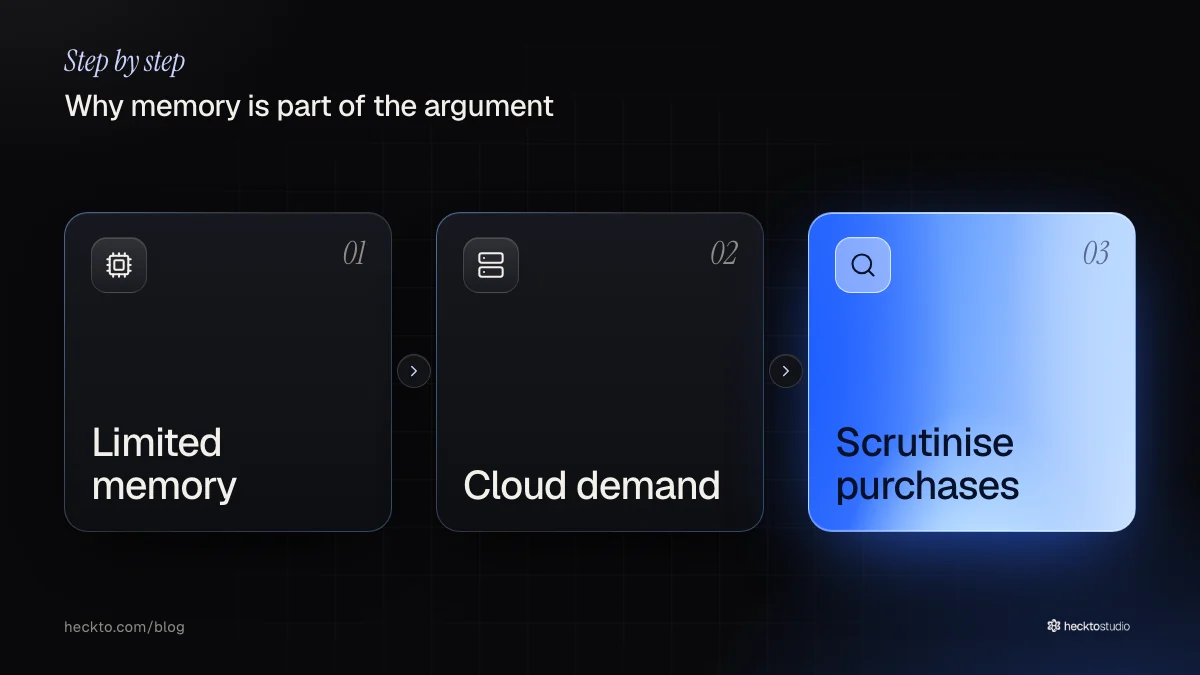
Altman’s case concerns how heavily memory gets used. He argues that sharing it through the cloud makes better use of a limited supply than leaving it lightly used in individual computers.
The Verge reports that Samsung and SK Hynix have committed substantial memory output to cloud operators and projects including OpenAI’s Stargate. It links that demand to rising prices for everyday devices. Samsung’s meeting with Altman concerned AI strategy and management; its statement did not publish his remarks.
We would treat this as a reason to scrutinise a purchase, rather than an instruction to move everything into the cloud.
Write the job before the shopping list
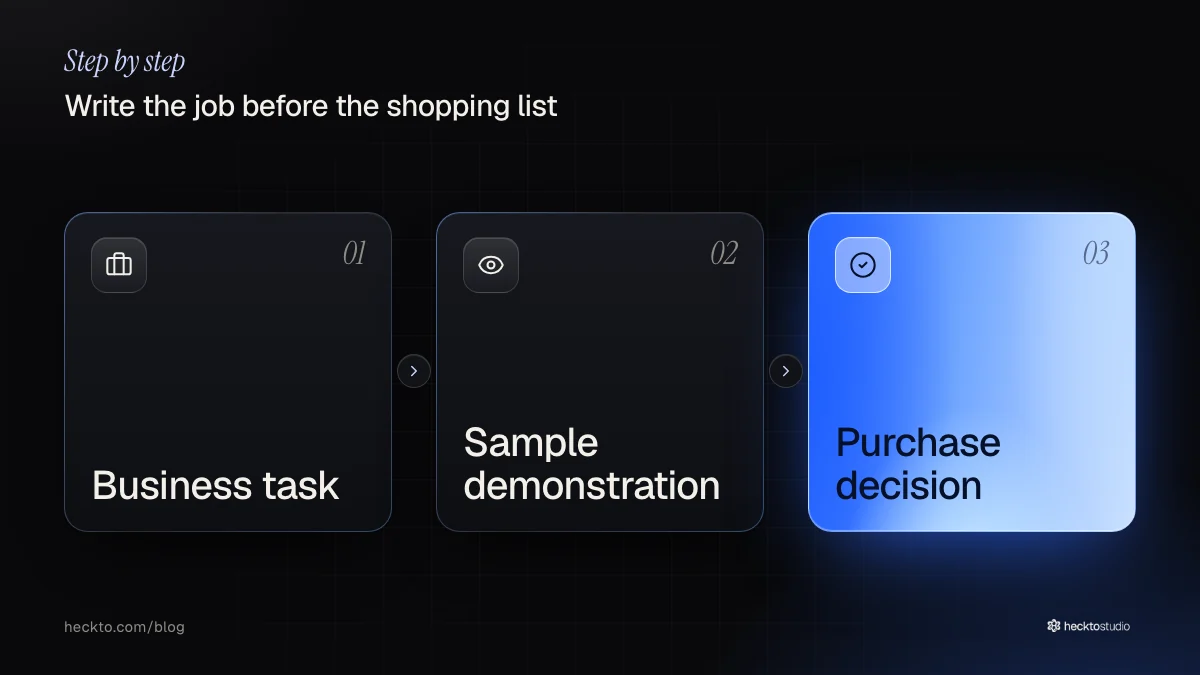
Our recommendation is to describe a real task before discussing specifications. For a business website, that might mean helping customers find the right service. For internal software, it might mean preparing a draft from information your team already holds.
Whether you are considering AI websites or AI software, ask the supplier to demonstrate your task with a suitable sample. Set your acceptance criteria before seeing the demonstration.
- Name the person who will use it.
- Describe an acceptable result and who checks it.
- Ask what equipment the proposal actually requires.
Compare complete proposals
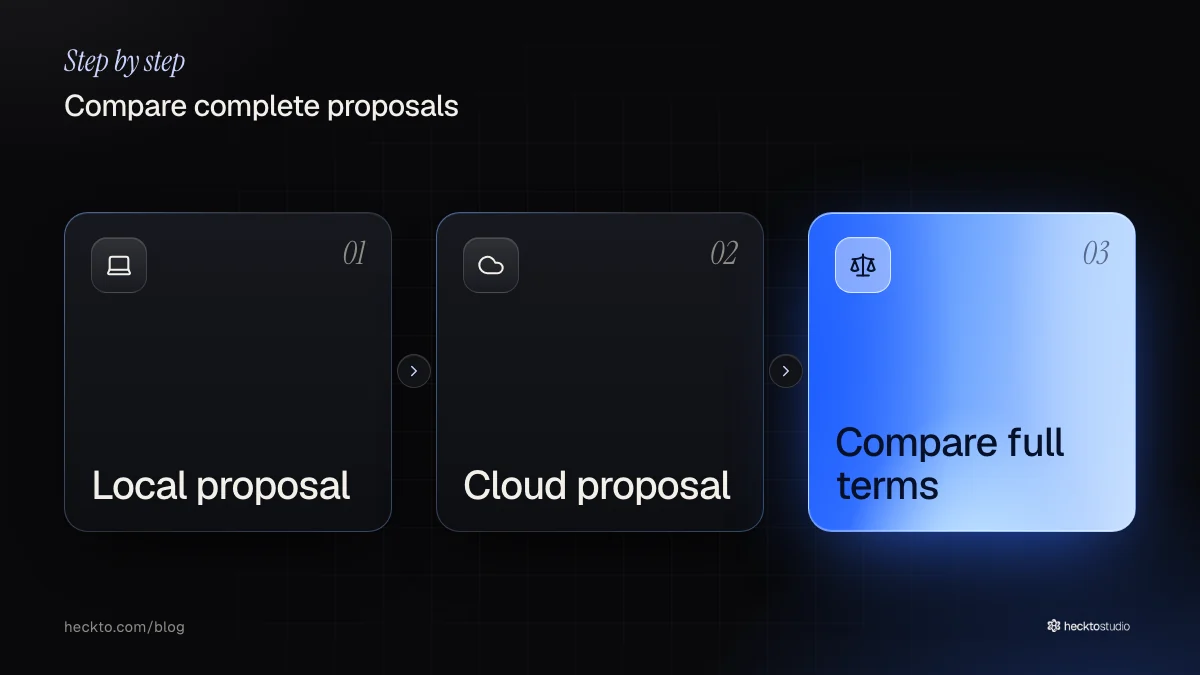
We suggest asking for local and cloud proposals against the same task. Request the full price, responsibility for maintenance, where business information would go, and how you would leave the arrangement.
Ask each supplier to explain what happens if the service or equipment becomes unavailable. Keep the answers beside the price. We think a proposal is incomplete until someone owns those practical questions.
Our take
At HECKTO, we think the wrong starting point is deciding whether you are a cloud business or a local AI business. Start with a job worth improving. We would favour the smallest commitment that proves useful, then reconsider equipment when the work provides a clear reason.
We would skip speculative hardware purchases and leave supplier claims unverified until a demonstration. The risk we would watch is paying for capacity your team has no defined use for.
Source: Sam Altman says it’s better for RAM to be in a data center than on your desk (The Verge, 30 October 2026).
Where this meets our work: AI Software.