AI image and video detection: should your business trust it?
· 2 min read · HECKTO studio

In short
- Pangram has launched image and video detection models.
- Its reported test scores need context.
- We recommend checking original files alongside detector results.
AI image and video detection is the focus of Pangram’s latest release. As reported by The Next Web and Engadget, the company has added tools that assess whether pictures and clips contain AI content.
For a UK small business, we think the useful question is practical: should a detector change what you publish or trust? Our answer is that a result deserves attention, but it should start a check rather than settle an argument.
What Pangram has released
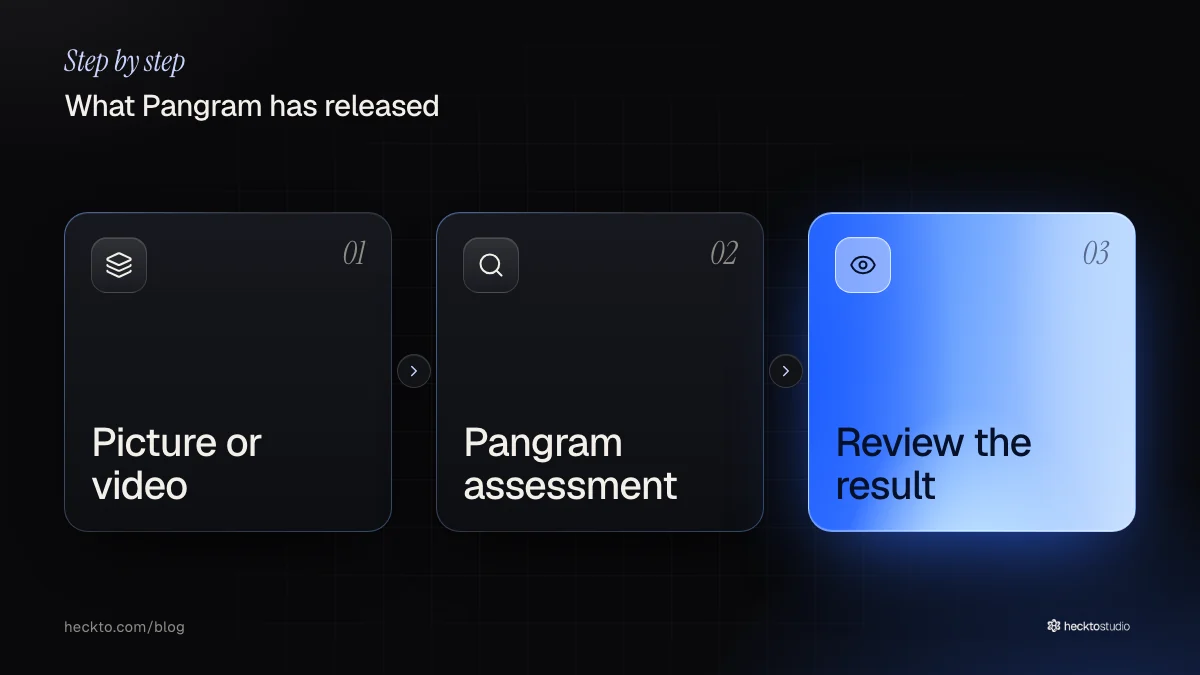
Pangram Image 1.0 examines pictures. Image Flash 1.0 handles video by checking individual frames. Both are available through its web app and API. The image model also works through its Chrome extension, and can highlight areas of a picture that may contain AI content.
Pangram reports a 98.7% score for Flash on DF26, an academic video benchmark. It also reports 99.96% accuracy for Image 1.0 on a separate image test it designed itself. Those figures describe different tests. They do not establish how reliably either tool will assess your next supplier photo.
Smaller pictures also need care. Pangram attaches a lower confidence warning to results for images below 512 by 512 pixels.
What to do with a suspicious result
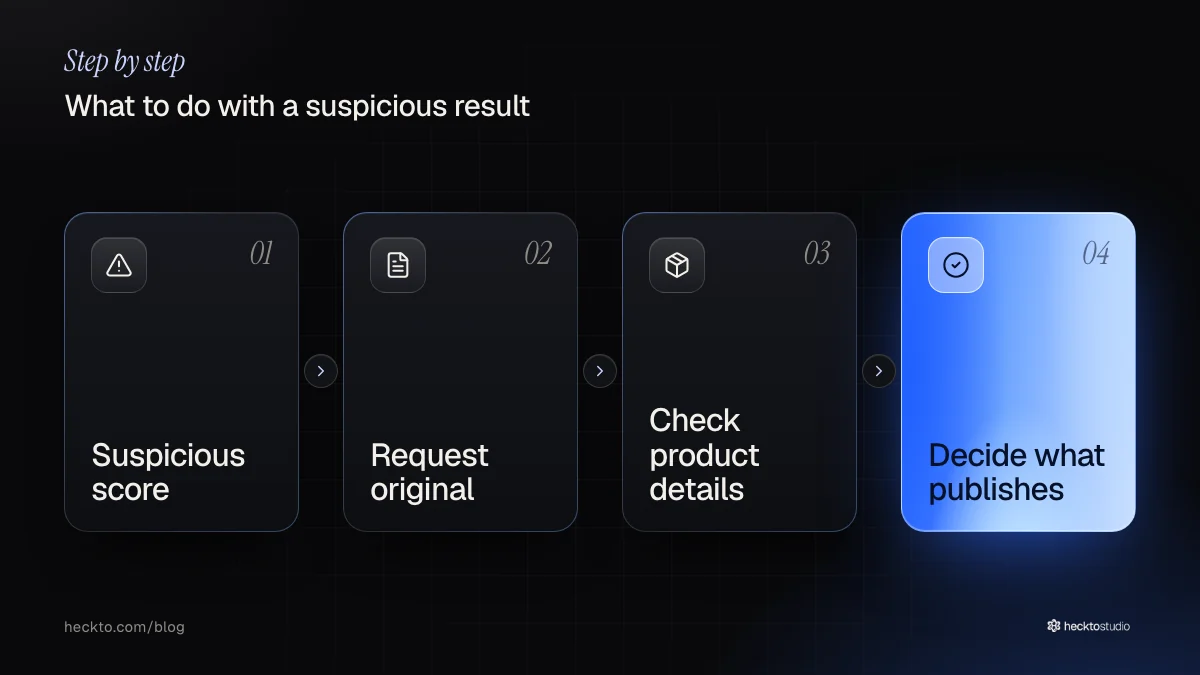
We would use a suspicious score as a reason to ask for the original file and an explanation of how the image was made. For example, before publishing a supplier’s product photo, ask whether it shows the actual item and what has been changed.
We would apply the same approach when commissioning AI visuals: agree which details must match reality before production starts. If you sell furniture, that might mean checking the finish, shape and fittings against the product.
For AI commercials, we would agree whether a scene is illustrative or presents something customers can expect to receive. A detector cannot make that business decision for you.
Our take
We think the strongest use for these tools is helping someone decide where to look more closely. We would be much less comfortable using them to accuse a supplier or reject a freelancer’s work automatically. Pangram’s reported scores are impressive, but our buying advice would depend on how it performs on the material a business actually handles.
Our preference is to spend effort on a clear brief and an agreed approval process first. A picture could be entirely generated and still serve an honest purpose. A real photograph could still give customers the wrong impression. We think the question worth paying someone to answer is whether the finished work represents your offer fairly. We have not tested Pangram ourselves; the risk is treating its reported performance as a guarantee for your files.
Source: Pangram’s new models spot AI fakes in images and video, it says (The Next Web, 4 November 2026).
Where this meets our work: AI Visuals.