Claude bank account access: what UK firms should consider
· 2 min read · HECKTO studio
In short
- The beta serves US subscribers on selected paid plans.
- Claude can inspect financial records but cannot transfer funds.
- Disconnecting a bank does not erase information already shared.
- We would start with one clear business question.
Claude bank account access raises a practical question for UK business owners: how much financial information should an AI assistant see? As The Next Web and The Verge report, Anthropic has introduced a US beta that connects Claude to personal banking records through Plaid.
For a small firm, we think the useful idea is asking plain questions about spending. The harder decision is whether answering those questions justifies sharing the underlying records.
What Claude can actually see
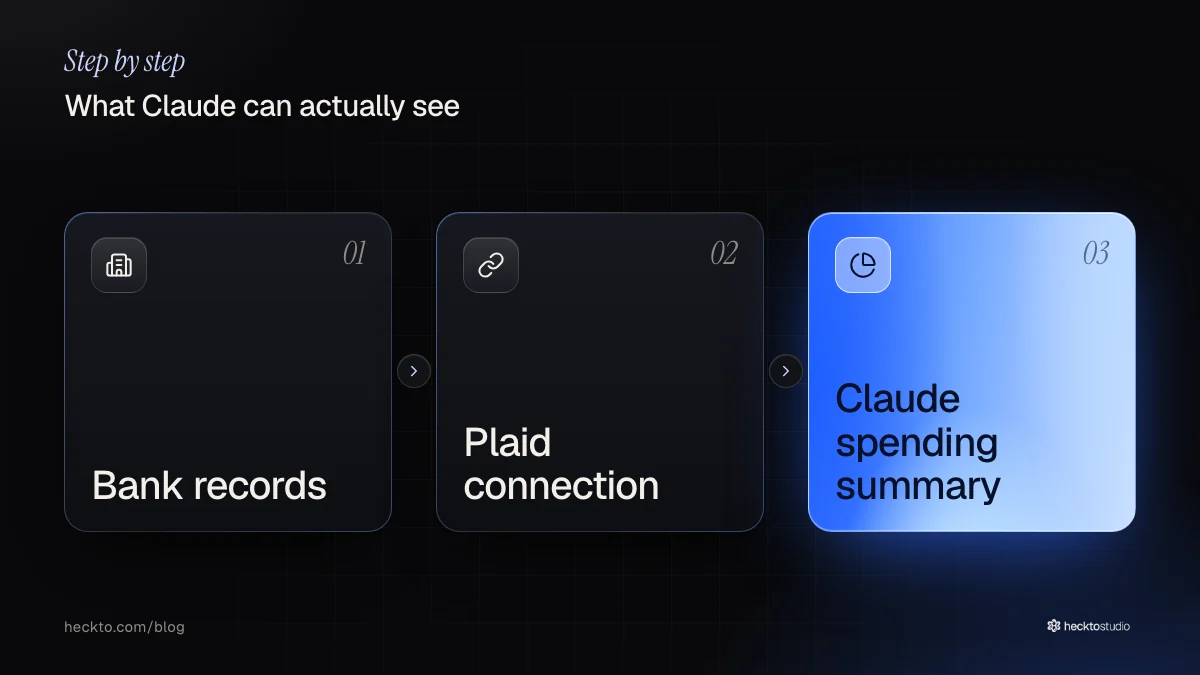
Personal Finance is reaching US customers subscribed to Pro, Max or Ultra. Plaid handles the connection, keeping banking passwords out of Claude’s view. The assistant can inspect account details, balances and transaction records covering up to two years.
It can organise spending into categories, flag possible duplicate payments or fees, and produce charts. Its permissions do not extend to transferring funds or making investments. Investment, loan and card accounts have narrower access, covering balances and credit limits.
Anthropic says the feature carries no advertising or paid recommendations. It also warns that answers can contain errors, so users should verify significant figures against their bank records.
What a UK owner should consider
The reported launch covers US personal accounts. These reports provide no UK launch date. Anthropic has separately connected small business finances through Xero, but that should not be confused with this personal banking beta.
There is also a distinction between disconnecting access and deleting information. Financial details already included in conversations, created outputs or shared links remain until users delete them. Anthropic says linked-account conversations are excluded from shared memory, while hub conversations are excluded from training.
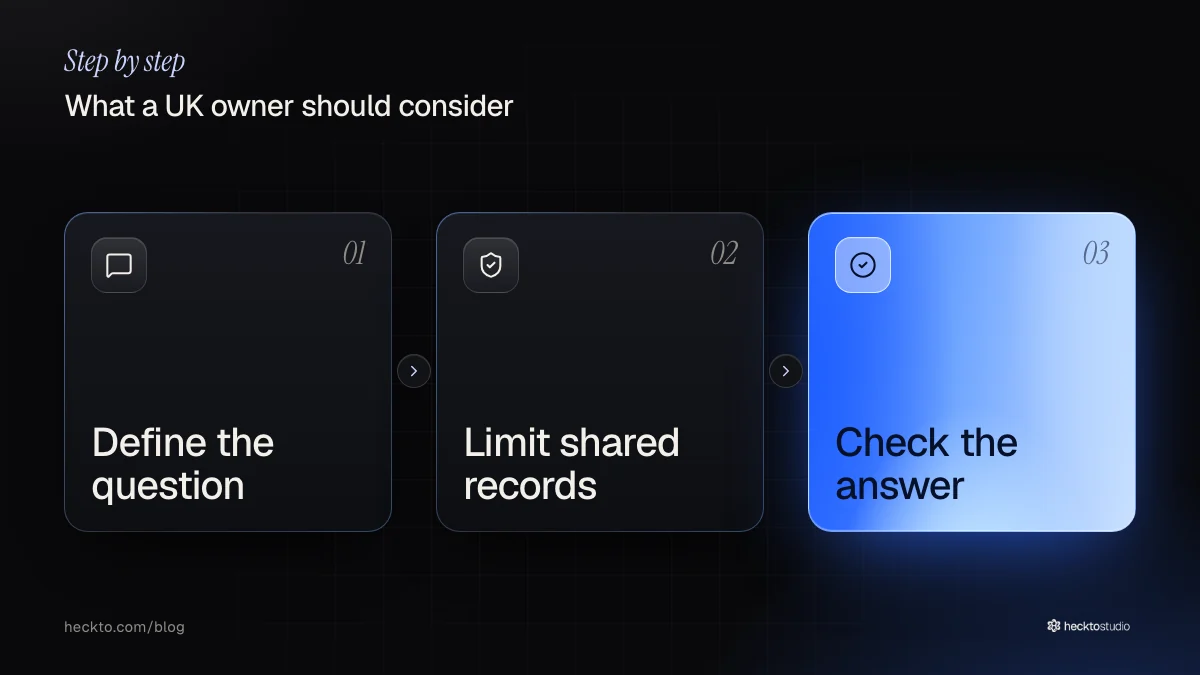
We think any business considering connected AI software should first define the question it needs answered. Reviewing recurring charges is a clearer brief than asking an assistant to look after the finances. We would also decide who checks its answers before anyone acts.
Our take
We think the strongest part of this idea is making records easier to question. We would value a clear explanation of rising costs more than another attractive dashboard. But we would judge the explanation by whether an owner can trace it back to the original entries. A confident answer without that trail would not meet our brief.
For HECKTO, the sensible starting point would be a narrow task with a named person checking the result. We would ask which records the task needs, where its outputs will remain, and how to remove them. That thinking belongs in the brief for AI websites that collect information too. We would skip broader access until it serves a clear purpose. Read-only permissions limit what Claude can do to the money; they do not remove the need to check its interpretation.
Source: Anthropic lets Claude read your bank accounts, but not move money (The Next Web, 5 November 2026).
Where this meets our work: AI Software.