Intel crash and PC prices: what UK firms should consider
· 2 min read · HECKTO studio

In short
- Intel's forecast disappointed investors.
- AI demand is putting pressure on PC components.
- We recommend checking needs before replacing equipment.
The link between the Intel crash and PC prices matters more to a small business than the share price alone. As TechCrunch and CNBC reported, Intel disappointed investors with its forecast while warning about pressure on computer buyers. For a UK owner planning purchases, we think the useful question is whether replacing equipment solves a real problem.
Why Intel fell
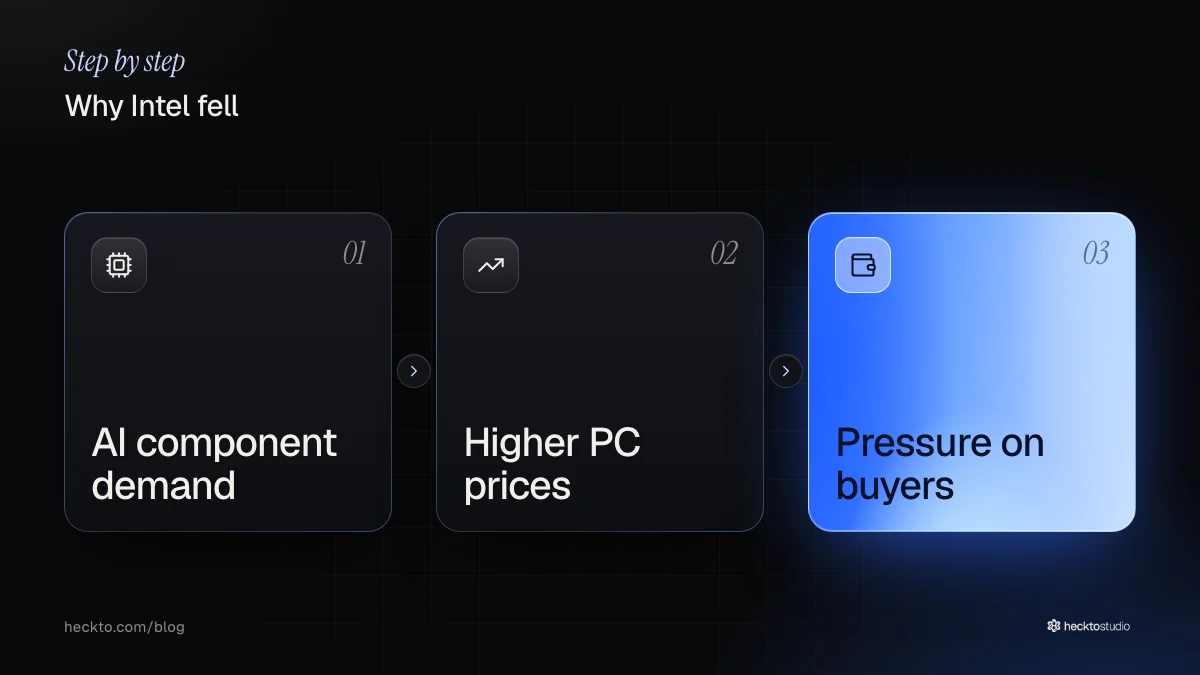
CNBC put Friday's fall in Intel shares at 29%. For the quarter, Intel put expected revenue at $15 billion to $16 billion, below what analysts anticipated. The US government's holding lost roughly $12 billion in value, although its investment remained profitable.
Behind the forecast were weak PC demand and disruption following a fatal explosion at an Israeli factory. Separately, AI companies are buying up components, including memory, contributing to rising PC prices. Intel reported that customers were signalling weaker demand as memory costs rose and supplies tightened. Its finance chief expected this PC slowdown to persist into the opening half of next year, and potentially longer.
Check the purchase
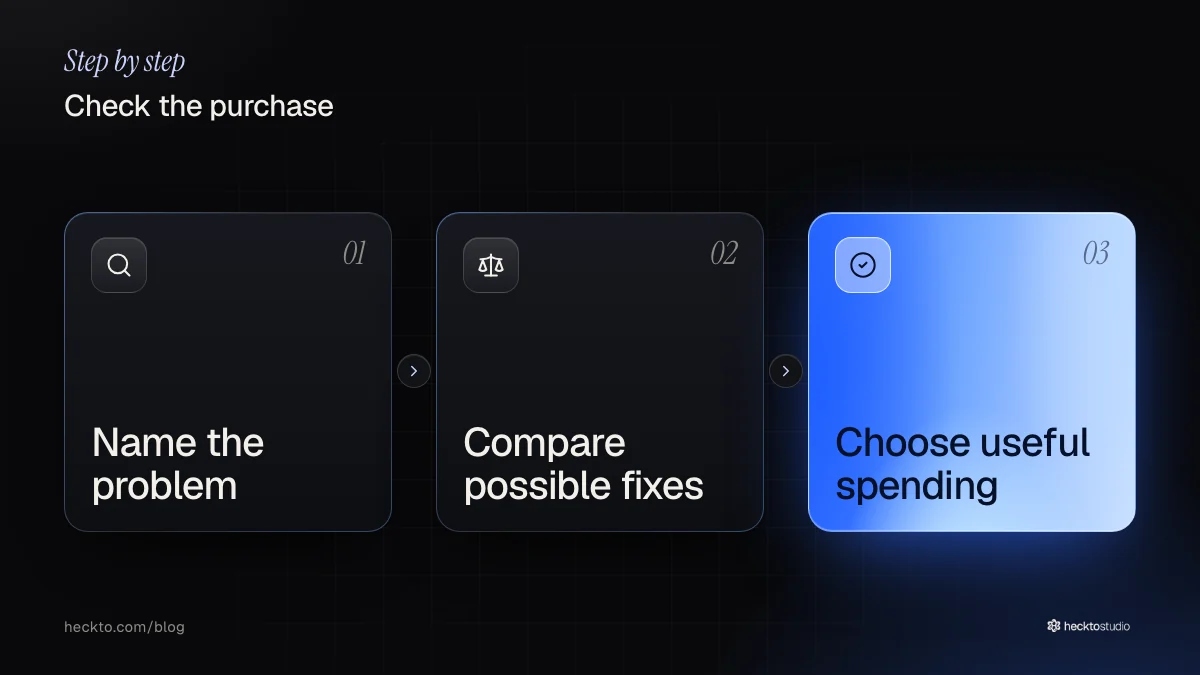
Neither report gives a UK price forecast. We would review planned purchases without assuming a particular increase or rushing to order. List which computers cause problems, what those problems prevent, and whether repair or replacement would help.
We would also check whether the frustration comes from equipment or the work itself. If staff repeatedly enter identical information, consider whether AI software could remove that step. If customers struggle to send an enquiry, review the website. Our view is that spending should follow a named problem, with a clear way to judge whether the change helped.
Our take
We think the awkward part is that AI spending can squeeze the budget for ordinary computers. That makes us wary of recommending an upgrade simply because it carries an AI label. We would ask a small firm to describe the improvement it expects before committing money. We should meet that same standard in our proposals.
For us, a useful brief for AI websites starts with a customer task, such as making an enquiry easier. A software brief starts with work someone wants to stop repeating. Agree how to judge the result, then build the smallest version that can demonstrate value. We would keep working equipment where it still does the job. We have not checked individual suppliers' prices; this reporting cannot tell you what your next computer will cost.
Source: Intel’s stock crashes, knocking $12B from government’s stake (TechCrunch, 30 October 2026).
Where this meets our work: AI Software.